Draw rectangles
on paper, in pencil.
It starts with the sound of a pencil on paper. Draw rectangles; every solve becomes a stamp. Every puzzle has exactly one answer — no guessing.
Download links go live at launch. 四角 · SAGAK
Three lines and you know it
Divide the grid into rectangles, each holding exactly as many cells as its number.
Every cell belongs to a rectangle, and every rectangle holds exactly one number.
Every board has a single answer. There is nothing to guess.
The draw, the paper, the album
The rectangle you drag follows your finger exactly. Ink deepens as the count closes in, and a short tap answers the moment it matches.
Everything on screen could be made from paper, pencil, ink and a stamp. No glow, no confetti.
Your finished division is printed as a stamp. Colour starts from the rectangle you solved last, so the same puzzle looks different in every album.
See it before you install
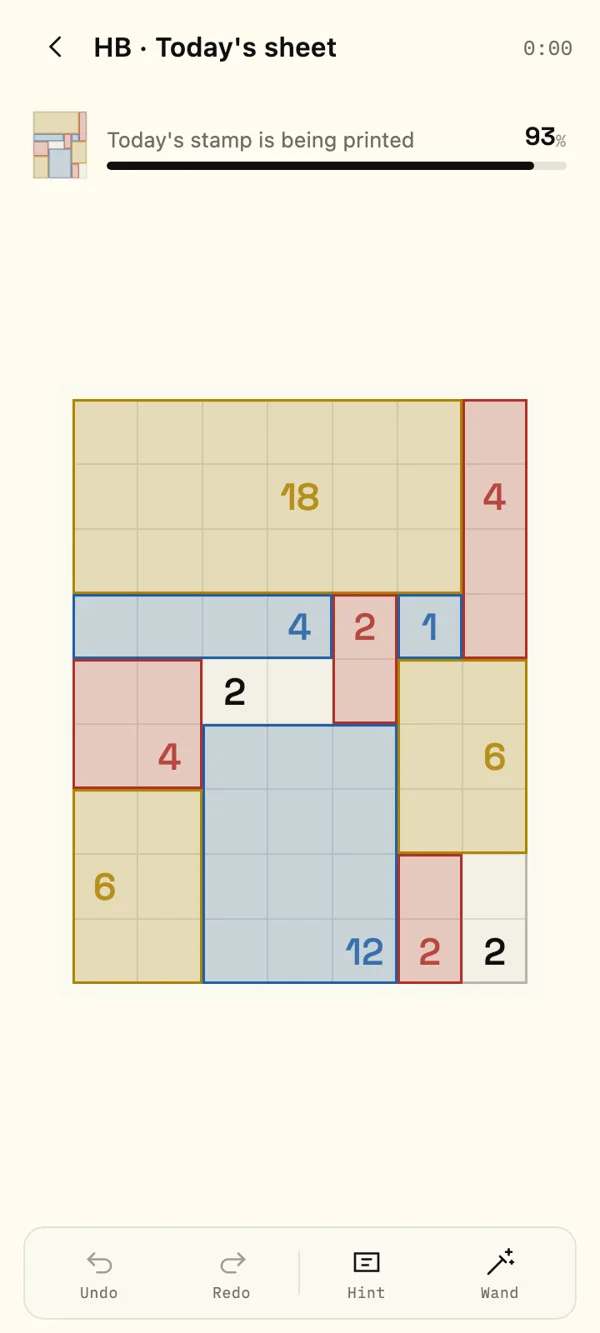
Draw a rectangle
Lift your finger at the corner and the rectangle is committed. Tap a wrong one once to erase it.
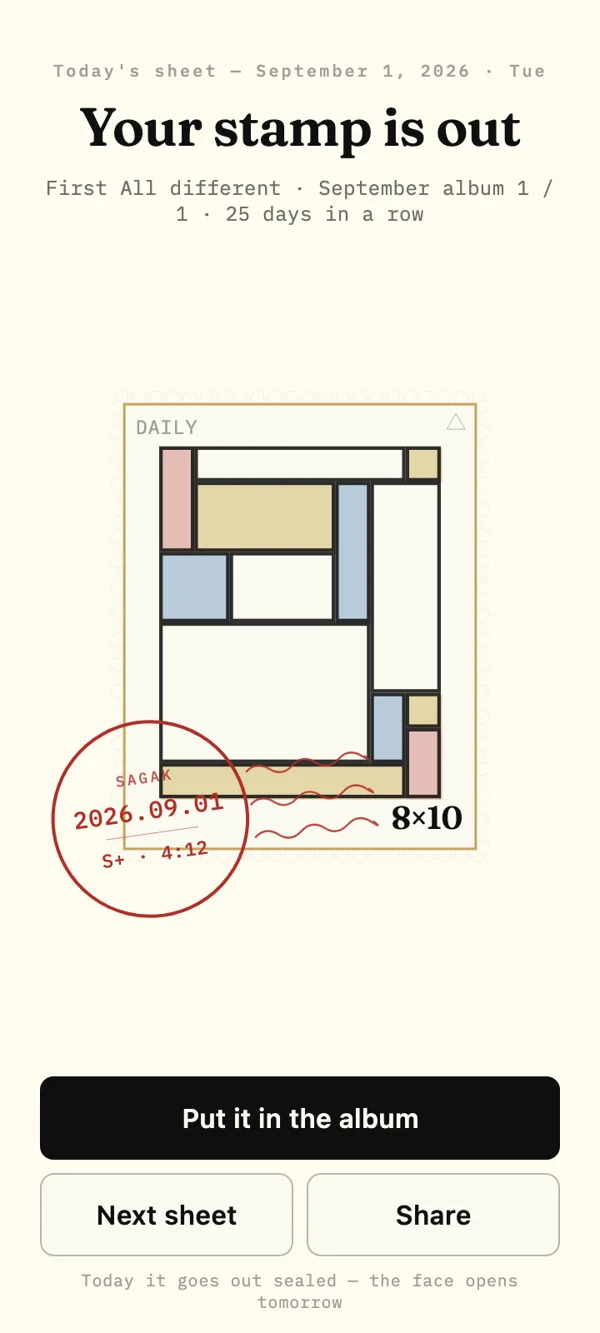
One stamp is the celebration
The board shrinks into a stamp; paper and postmark settle on top. That is the whole flourish.
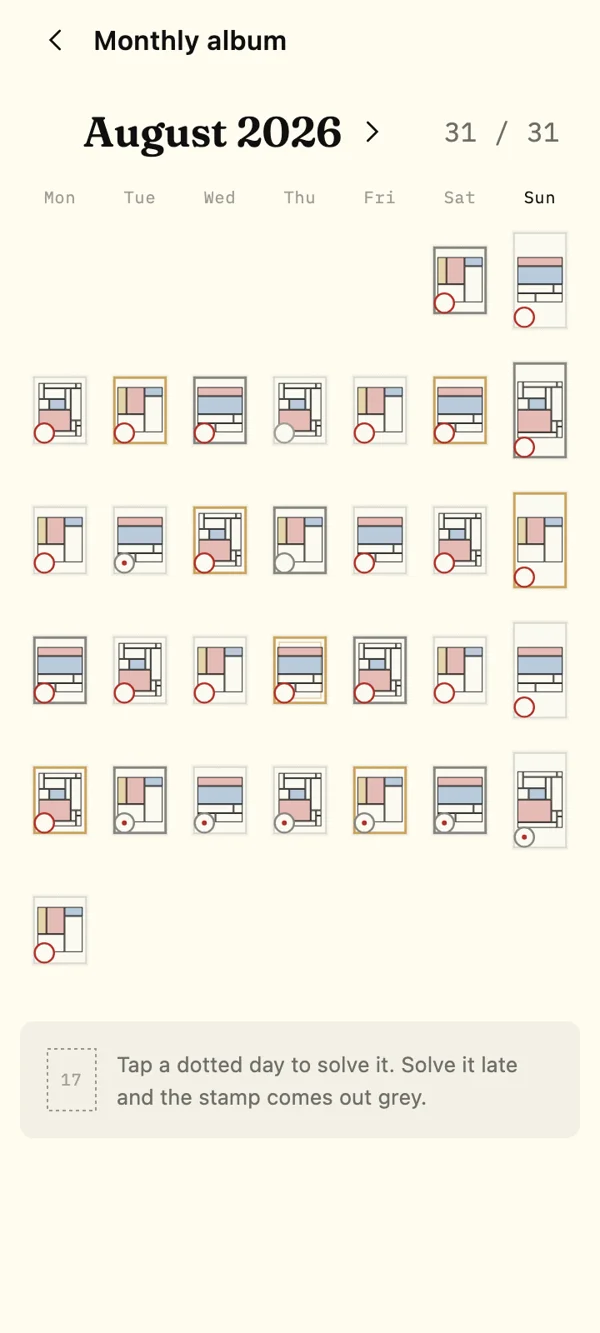
The calendar fills in
One sheet a day, the same puzzle for everyone. Solve a missed day later and it still fills that date.
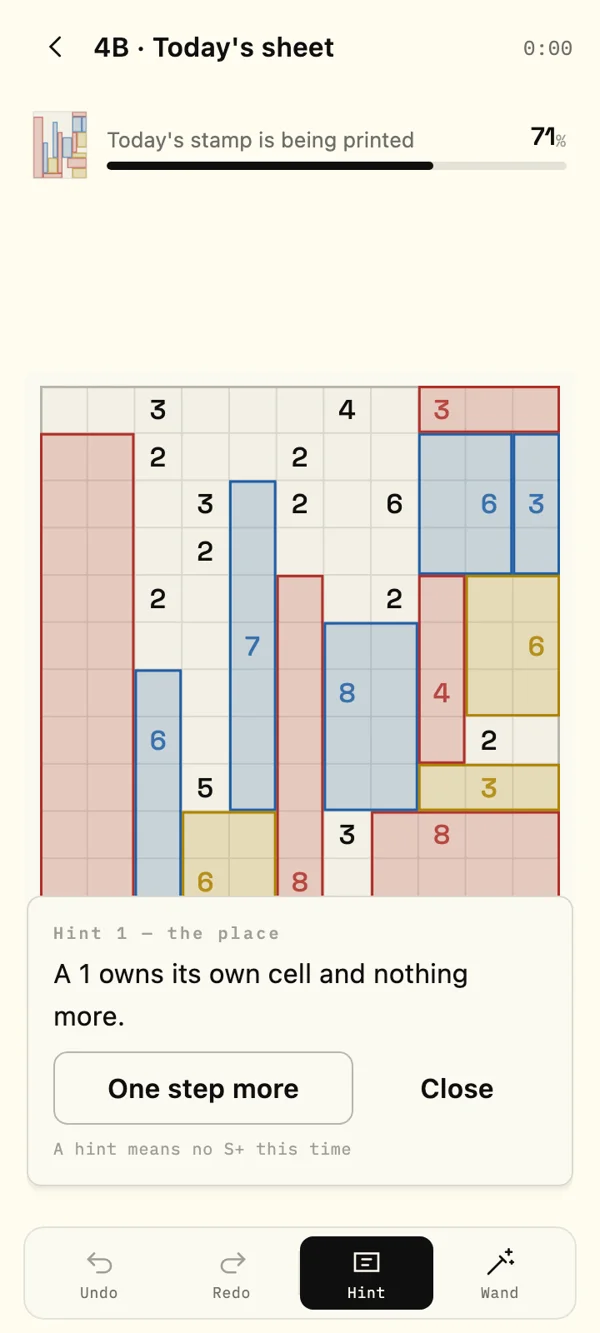
Hints teach instead of solving
Each hint spells out the next single step of logic. Eleven techniques, in order.
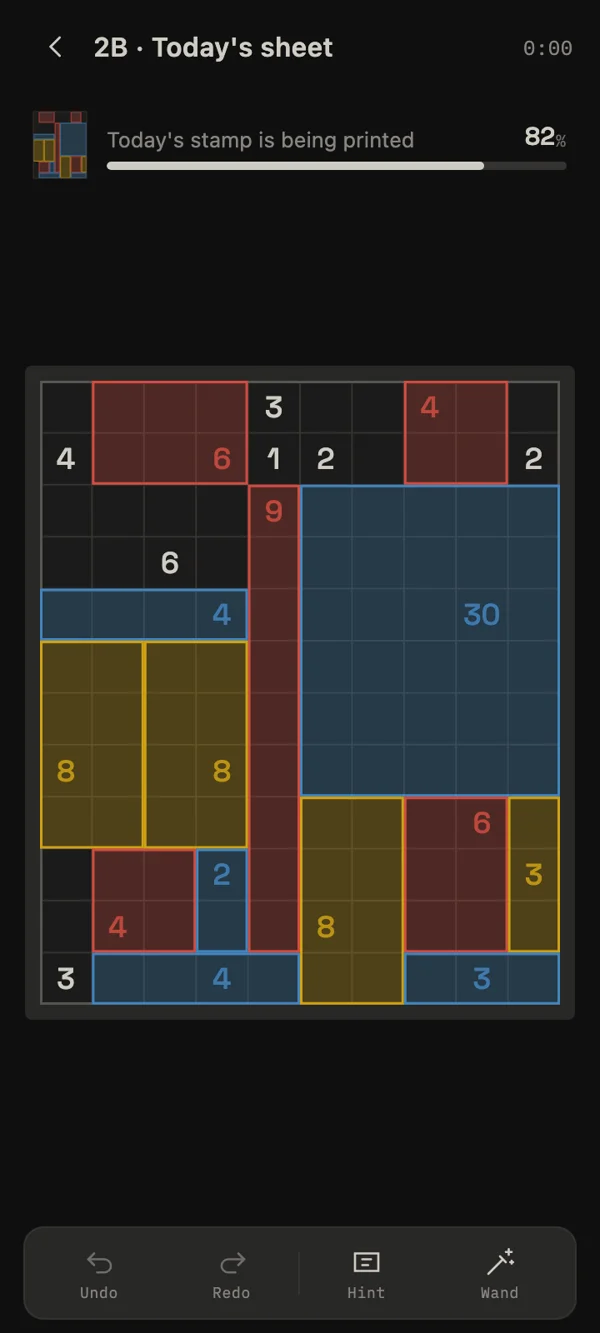
At night, darker paper
Not a black screen — dark paper. The grain stays; only the ink turns light.
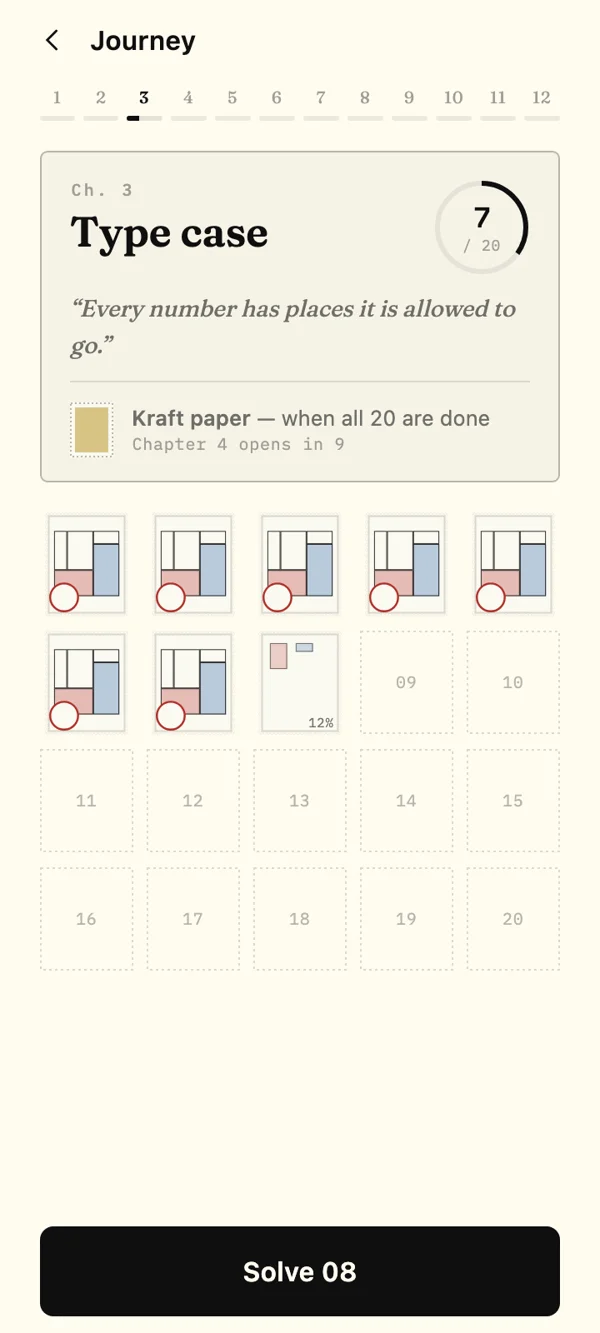
Twelve notebooks, twenty sheets each
You join an old print shop as an apprentice and fill the sample notebooks. Solve 16 of 20 puzzles to open the next notebook.
The answer becomes the stamp
A shikaku answer is a division of rectangles. Printed in two or three inks, it is a stamp. The postmark carries your grade and your time.
Twelve volumes teach you
how to solve
You join an old print shop and post office as an apprentice and fill the twelve sample notebooks you inherited. Each volume teaches one new technique, and solving 16 of 20 puzzles opens the next notebook.
Down to what you never see
Generation counts the solutions and certifies that logic alone finishes the board.
Hints explain the next logical step. A separate magic wand can help place a rectangle.
A rectangle’s area becomes a note, and finishing plays back the notes of that board. Touch arrives with the sound.
Colour-blind patterns, high contrast, larger numbers and a screen reader that reads the board.
What people ask first
What is shikaku?
A logic puzzle: divide a grid of numbers into rectangles. Each rectangle has as many cells as its number and holds exactly one number. It was devised in Japan in 1989.
Does it work offline?
Solving, the album and your records all run on the device.
Does using a hint show up?
That sheet is recorded as assisted and the postmark grade changes. Nothing blocks your progress.
Where is my progress stored?
Progress and your album are stored on your device. There is no in-app cloud sync.
Which languages?
17 languages. Some detailed content in additional languages falls back to English.
Which devices?
iPhone and Android phones and tablets.
Start with today’s sheet
The download links open here at launch.